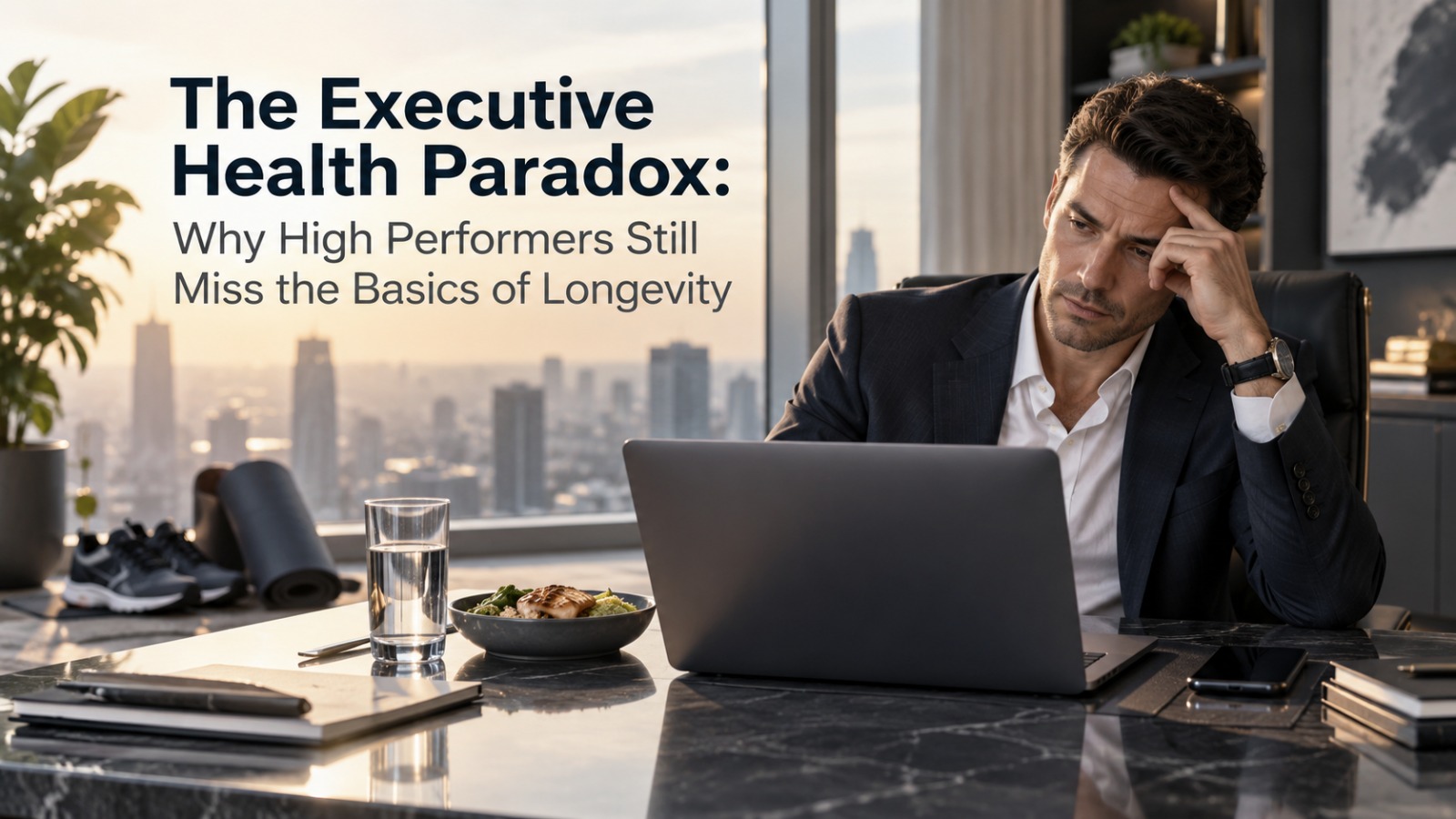
Technology executives are accustomed to optimizing systems, measuring performance, and making data-driven decisions. Yet in clinical practice, some of the most successful professionals still overlook fundamental health risks that can quietly undermine performance today and healthspan decades from now.
Among tech executives, three concerns come up repeatedly: sleep and circadian disruption, cardiometabolic risk, and declining physical resilience from sedentary work. Long workdays, frequent travel, late-night screen exposure, and constant cognitive stimulation can interfere with sleep quality and recovery. Over time, that can affect blood pressure, appetite regulation, glucose metabolism, mood, and cognitive performance.
Cardiometabolic health is often the biggest surprise. A patient may be thin, exercise regularly, wear a health tracker, and consider themselves healthy, yet testing may reveal elevated ApoB, insulin resistance, visceral adiposity, low cardiorespiratory fitness, or hypertension. Looking fit and being metabolically healthy are not always the same thing. Body weight alone cannot tell us enough about cardiovascular risk, metabolic health, or physiologic reserve.
Many technology leaders are highly proactive about longevity, but sometimes in the wrong order. They are often comfortable with continuous glucose monitors, biological-age testing, hormone panels, wearables, genetic testing, whole-body imaging, and emerging longevity therapies. That curiosity is valuable, but it can become counterproductive if sophisticated testing distracts from more established risks such as poor sleep, elevated blood pressure, abnormal lipids, insufficient muscle mass, or inactivity.
At Rêve Health Institute, we think about longevity as a pyramid. The foundation includes cardiovascular risk reduction, metabolic health, exercise, muscle preservation, nutrition, and sleep. Precision diagnostics and emerging therapies can add value, but they should sit on top of a strong foundation, not replace it.
For many executives, the initial goals are improved energy, sharper cognition, better sleep, healthier weight, and sustained performance under pressure. But the more meaningful question is broader: How do we preserve cardiovascular, metabolic, musculoskeletal, and cognitive function for the next 20 to 30 years?
That requires choosing health data carefully. Blood pressure, fasting glucose, HbA1c, lipid profile, ApoB, lipoprotein(a), body composition, visceral fat, kidney and liver function, bone density, muscle mass, strength, mobility, and cardiorespiratory fitness often provide more actionable information than collecting data simply because technology makes it available.
The same principle applies to biohacking. NAD+ IVs, peptide stacks, extensive supplement regimens, red-light devices, cold exposure, and other longevity treatments may be biologically interesting, but biological plausibility is not the same as proof that an intervention slows human aging.
The most powerful longevity strategies are often the least glamorous: exercise, sleep, blood-pressure control, lipid management, healthy body composition, adequate protein, muscle preservation, avoiding tobacco, and maintaining meaningful relationships.
At RHI, the goal is not to chase every new biomarker or biohack. It is to create an individualized, science-backed strategy that improves performance today while protecting healthspan for the future.